
⚡ Quick Answer: Which Electrical Panels Can Get Your Florida Home Insurance Denied?
These four electrical panel brands are considered high-risk or ineligible by most Florida home insurance carriers
- Federal Pacific (FPE) / Stab-Lok — not eligible with 24 of 26 carriers we represent
- Zinsco / Sylvania — not eligible with 22+ of 26 carriers
- Challenger — not eligible with 22+ of 26 carriers
- Pushmatic — frequently flagged by inspectors, eligibility varies
Replacement typically costs $2,500–$5,000 for a standard 200-amp service. Some specialty carriers still write coverage for these panels — often at competitive rates — and we know which ones.
Worried your panel could get you cancelled? Find Out If You Qualify or call 904-268-3106
These Electric Panels Are Uninsurable in Florida—Is Yours on the List?
Older homes in Florida often come with surprises—some charming, some costly. One of the biggest hidden risks we see is the electrical panel, which can cause major insurance issues in Florida. If your home has an outdated or recalled panel, you may struggle to pass a 4-point inspection or even face having your Florida home insurance cancelled because of the panel.
In this article, I'll walk you through which panels are red flags, how many carriers reject each one, what to do if your home has one, and how to get insured once the problem is fixed.
Which Electric Panels Fail 4-Point Inspections in Florida?
Before issuing a new policy on an older Florida home, most insurers require a 4-point home inspection. If you're unsure what kind of panel you have, a licensed Florida electrician or inspector can help identify it — especially if you're preparing for a 4-point inspection.
If your panel is one of the following brands, expect to be flagged or denied new insurance coverage until it is replaced:
1. Federal Pacific Electric (FPE) or Stab-Lok Breakers
- Years used: 1950s–1980s
- Problem: These panels used Stab-Lok breakers, which are known to fail to shut off during an overload or short circuit. In testing, many of these breakers failed to trip as often as 1 in 4 times, creating a serious fire risk.
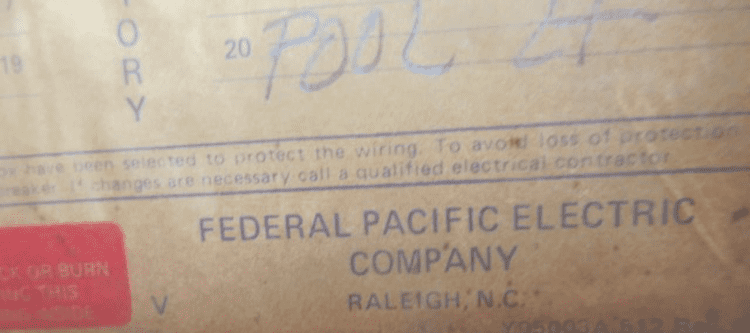
- What it looks like: Panel door marked “FPE” or “Federal Pacific,” breakers labeled “Stab-Lok.”
- Insurance stance: FPE panels are rejected by nearly every Florida home insurance carrier we work with — 24 of the 26 carriers in our agency will not write a policy on a home with an FPE panel. Most insurers will decline coverage until the panel is replaced—whether it's labeled FPE or just Stab-Lok. Both are considered high risk.
2. Zinsco / Sylvania Panels
- Years used: 1950s–1970s
- Problem: Breakers can overheat, fuse to the bus bar, and stay live even when turned off.
- What it looks like: Vertical rows of colorful breakers, marked Zinsco or Sylvania.
- Insurance stance: Usually rejected by insurers. In our experience, the majority of Florida carriers will not write a policy on a home with Zinsco or Sylvania panels. Replacement is typically required.
3. Challenger Panels
- Years used: 1980s–1990s
- Problem: Known to overheat, especially as they age. Some components were recalled.
- What it looks like: Panel or breakers labeled “Challenger.”
- Insurance stance: Increasingly flagged by Florida insurers. Most of the carriers we work with now consider Challenger panels not eligible for new coverage. As of 2026, Citizens Property Insurance Corporation will still accept them, as they accept all panel types. However, Citizens is the state's insurer of last resort, and Challenger panels are still a known fire hazard. If your home has one, we recommend replacing it.
4. Pushmatic Panels (Honorable Mention)
- Problem: Old, hard to service, and no longer manufactured. Some have been known to fail under load.
- Insurance stance: Often flagged, though not as strictly as the panels above. While most Florida carriers don't specifically name Pushmatic on their exclusion lists, inspectors may still flag them during a 4-point inspection due to their age and lack of available replacement parts.
How Many Florida Carriers Accept or Reject These Panels?
We work with 26 Florida home insurance carriers. Based on our direct experience with their underwriting guidelines, here's how the market breaks down for each panel type:
| Panel Type | Not Eligible | Eligible | What This Means for You |
|---|---|---|---|
| Federal Pacific (FPE) / Stab-Lok | ✘ 24 of 26 carriers | 2 carriers | Almost always requires replacement. You're down to Citizens and one other option. |
| Zinsco / Sylvania | ✘ 22+ of 26 carriers | 2–4 carriers | Most carriers require replacement. A few may consider on a case-by-case basis. |
| Challenger | ✘ 22+ of 26 carriers | 2–4 carriers | Increasingly flagged. Options are shrinking every year. |
| Pushmatic | Varies by carrier | Varies by carrier | Not always named on exclusion lists, but often flagged by inspectors. |
Source: Augustyniak Insurance Group experience across 26 Florida home insurance carriers. Market conditions change; always verify with your agent for the most current options. Citizens Property Insurance Corporation is the only carrier that consistently accepts all panel types, but as the state’s insurer of last resort, it should be considered a backup — not your first choice.
The takeaway is clear: if you have an FPE panel, 24 of the 26 carriers we work with won't write your policy. For Zinsco and Challenger, the numbers are nearly as bad. Replacing it is the single best thing you can do to open up the full market of competitive carriers and rates. See which carriers we represent.
Problem panels aren't the only electrical issue that limits your insurance options in Florida. If your home also has aluminum wiring, the carrier pool gets even smaller — only 6 of 17 major Florida carriers will write a home with repaired aluminum wiring, and the rest require a full copper rewire.
Worried your panel could get your policy cancelled?
We work with 26 Florida homeowners carriers - and we know which ones will still write coverage for these panels.
Call 904-268-3106Or start your quote online — we respond fast.
How to Pass a 4-Point Inspection in Florida If Your Electrical Panel Is Uninsurable
✔ Start with a Licensed Electrician
Have a professional take a look and give you a quote. You'll want a clear assessment of whether your panel really needs to be replaced—and how much it'll cost.
✔ Be Ready to Replace It
In most cases, replacement is the only safe option. For a typical 200-amp service, you're looking at around $2,500 to $5,000. Some utility companies or local programs may help with the cost, so it's worth checking.
✔ Save Your Paperwork
Hold on to everything—photos, electrician reports, invoices. Some insurance companies will ask for proof of the upgrade, and having documentation makes things go more smoothly. You may also need to get the 4-point inspection redone once you have had the new panel installed.
✔ Talk to Your Insurance Agent Early
Don't wait until you're under pressure. We help Florida homeowners with this every day and can guide you through your options. If you're in the Jacksonville area, see our guide on how much homeowners insurance costs in Jacksonville — replacing your panel can open up better rates.
✔ Buying a Home? Negotiate Early
If you're in the process of buying a home and the panel is on this list, try to negotiate with the seller to have it replaced before closing. That way, you're not stuck dealing with insurance or safety issues right after you move in. You can also read our guide on what to expect from a 4-point inspection in Florida.
Why Is My Electric Panel Uninsurable?
An electrical panel is considered uninsurable when it poses safety risks that make home insurance companies unwilling to provide coverage.
Common reasons include:
- Known fire hazards
- Failure to trip during electrical surges or overloads
- Manufacturer recalls or defects
- Lack of replacement parts for obsolete models
- High failure rates on 4-point inspections in Florida
These panels often include brands like Federal Pacific (FPE), Zinsco, and Challenger, all of which are commonly flagged by insurers due to documented safety issues.
What Is an Electrical Panel?
Your electrical panel is the central hub for power distribution in your home. It routes electricity from your utility provider to lights, appliances, and other systems. Each circuit is protected by a breaker designed to trip in case of an overload or short circuit.
What Does an Electrical Panel Look Like?
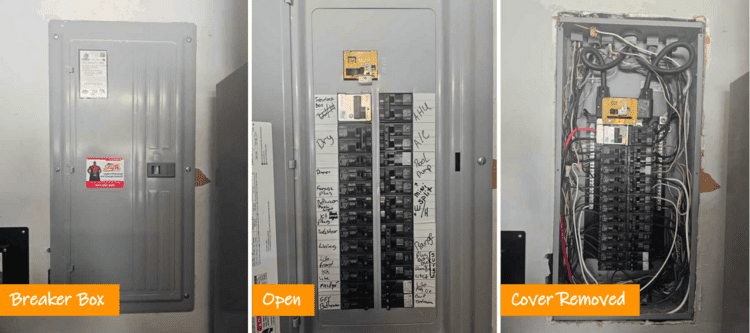
Most electrical panels are located in laundry rooms, garages, or utility closets. They vary in size and layout, but generally contain a metal box with circuit breakers lined up inside.
Here's a typical example of a modern residential breaker panel (pictured below). This one does not show a recalled or high-risk model — but it gives you an idea of what the inside of your panel might look like with the cover removed.
Key Takeaways
- Four panel brands are red flags: Federal Pacific (FPE), Zinsco/Sylvania, Challenger, and Pushmatic panels are the most commonly flagged electrical panels for Florida home insurance.
- Most Florida carriers won't insure them: Out of the 26 carriers we work with, 24 will not write a policy on a home with an FPE panel. Zinsco and Challenger are nearly as restricted. Only Citizens and one or two other carriers currently accept all panel types.
- They will fail a 4-point inspection: If your home requires a 4-point inspection, any of these panels will likely be flagged — and most insurers won't issue coverage until the panel is replaced.
- Replacement costs $2,500–$5,000: For a typical 200-amp panel replacement including permits, most Florida homeowners pay between $2,500 and $5,000.
- Replacing it saves you money long-term: A new panel opens the door to more carriers, better rates, and a safer home. It's one of the best investments you can make in an older Florida home.
The Bottom Line
If your Florida home has a Federal Pacific, Zinsco, Challenger, or Pushmatic electrical panel, your insurance options are extremely limited. Most carriers won't write a policy until the panel is replaced, and the few that will — like Citizens — are insurers of last resort with higher rates and fewer coverage options.
The fix is straightforward: hire a licensed electrician, replace the panel, save your documentation, and then let us shop your home with the full market. We help homeowners with this exact situation every day.
Don't wait for a cancellation notice or a failed inspection to act. If you know your panel is on this list, getting ahead of it puts you in control — of your safety, your coverage, and your costs.
Frequently Asked Questions
Can I still get home insurance in Florida if I have a Federal Pacific or Zinsco panel?
Most insurance companies will refuse to insure a home that has this type of panel or cancel an existing policy if these panels are present due to known fire risks. Citizens Property Insurance Corporation is one of the only Florida carriers that accepts all panel types, but Citizens is the state's insurer of last resort. It's best to replace the panel before shopping for new insurance.
What are the most common electrical panel insurance issues in Florida?
Florida home insurance providers often deny or cancel policies for homes with panels like Federal Pacific (FPE), Zinsco, or Challenger due to fire risk and failure rates. These brands are considered not eligible by the majority of Florida home insurance carriers.
Will replacing my electrical panel help with my insurance?
Yes. Replacing an outdated or unsafe panel often allows you to qualify for more insurance options and potentially lower premiums. Once the panel is replaced, you'll have access to a much wider range of Florida homeowners insurance carriers instead of being limited to Citizens or the few companies that accept older panels.
How much does it cost to replace a problematic panel?
Costs vary, but most homeowners spend between $2,500 and $5,000 for a standard 200-amp panel replacement, depending on your home's electrical setup, permits, and location. Some utility companies or local programs may offer financial assistance.
After a failed 4-point inspection, how soon do I need to replace my panel?
Most companies will refuse to issue a new policy to a home with one of these panels. If your insurance company inspects your home, they also may issue a replacement deadline, typically within 30–60 days. Acting quickly ensures your policy stays active.
Related Reading
- Can You Insure a Florida Home With Aluminum Wiring? (Carrier Comparison Chart)
- Is Aluminum, Cloth, and Knob & Tube Wiring a Florida Home Insurance Dealbreaker?
- What is a 4-Point Inspection in Florida and Why It Matters
- 25 Largest Homeowners Insurers in Florida: 2024 Updated List
- How Much Does Homeowners Insurance Cost in Jacksonville, FL?

Discussion
There are no comments yet.